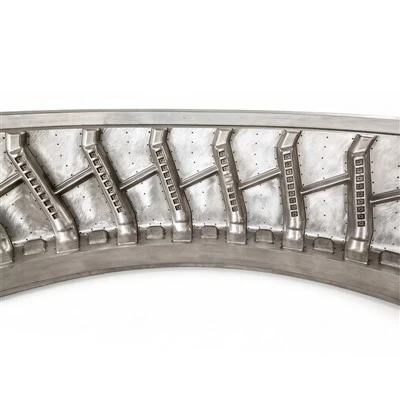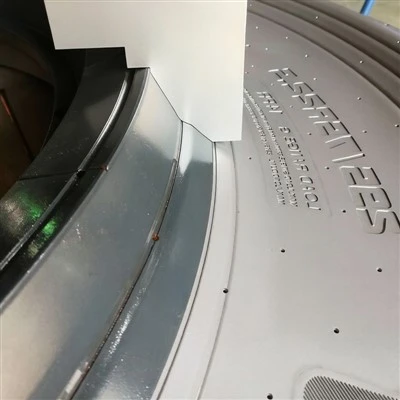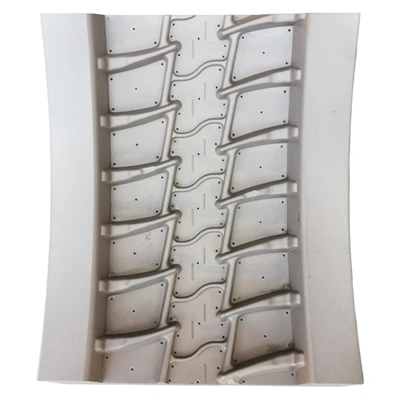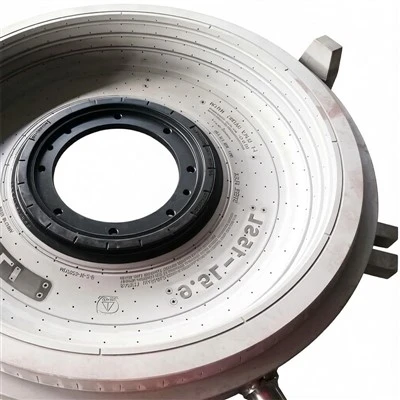
In the manufacturing process of radial tires, the alignment of a Cone Guide Segment Radial Tire Mold is of paramount importance. As a reliable Cone Guide Segment Radial Tire Mold supplier, we understand the critical role that proper alignment plays in ensuring the quality and performance of the tires produced. In this blog, we will delve into the requirements for the alignment of such molds, exploring the technical aspects and the impact on tire manufacturing.
1. Precision in Linear Alignment
The linear alignment of the Cone Guide Segment Radial Tire Mold is the foundation for achieving high - quality tires. The segments of the mold must be precisely positioned along a straight line during assembly. Any deviation in the linear alignment can lead to uneven tire tread distribution, which in turn affects the tire's grip, handling, and wear characteristics.


For example, if the segments are misaligned, it may cause the tread pattern on one side of the tire to be more prominent than the other. This imbalance can result in uneven tire wear, shortening the tire's lifespan and potentially compromising safety. To meet the requirement of linear alignment, we use advanced machining techniques and precision measurement tools. Laser alignment systems are often employed to ensure that the segments are within the specified tolerance range, typically within a few micrometers of the ideal alignment.
2. Angular Alignment Accuracy
In addition to linear alignment, angular alignment is also crucial. The cone guide segments need to be set at the correct angles to ensure proper tire shaping. The angles of the segments influence the curvature and profile of the tire sidewall and tread. Incorrect angular alignment can lead to a distorted tire shape, affecting the tire's performance in terms of pressure distribution and rolling resistance.
A well - aligned mold with accurate angular settings allows the tire to have a consistent and symmetrical profile. This is essential for maintaining even contact with the road surface, which is vital for optimal traction, braking, and fuel efficiency. Our manufacturing process involves meticulous calibration of the angular positions of the segments. We use computer - aided design (CAD) and computer - aided manufacturing (CAM) systems to precisely define and control the angles, and then verify them through physical measurements using high - precision protractors and optical measuring devices.
3. Parallelism of the Segments
Parallelism is another key requirement for the alignment of the Cone Guide Segment Radial Tire Mold. The segments should be parallel to each other to ensure uniform pressure distribution during the tire molding process. If the segments are not parallel, the pressure applied to different parts of the tire blank will vary, causing uneven curing and potential defects in the tire structure.
Uniform pressure distribution is essential for ensuring consistent rubber density throughout the tire. This affects the tire's physical properties, such as hardness, elasticity, and strength. To achieve parallelism, we use specialized fixtures and alignment jigs during the assembly and adjustment of the mold segments. These tools help to align the segments accurately and maintain their parallel relationship during the molding process.
4. Alignment with the Center Axis
The Cone Guide Segment Radial Tire Mold must be precisely aligned with the center axis of the tire building machine. This alignment is critical for ensuring the concentricity of the tire. A misaligned mold with respect to the center axis can result in an eccentric tire, where the center of the tire is not in line with the rotational axis.
Eccentric tires can cause vibrations during high - speed driving, leading to discomfort for passengers and potential damage to the vehicle's suspension system. To ensure alignment with the center axis, we perform comprehensive inspections and adjustments using centering devices. These devices accurately measure the position of the mold relative to the center axis and allow for fine - tuning to achieve the required concentricity.
5. Impact on Different Types of Tires
The alignment requirements also have different implications for various types of tires. For instance, when manufacturing All Steel Radial Light Truck Tire Mold, the mold alignment needs to account for the heavier loads and more demanding operating conditions of light trucks. Precise alignment ensures that the tire can withstand the stress and strain of carrying heavy cargo.
In the case of Slanted - Plane Commercial Vehicle Tire Mold, the special design of the mold requires even more stringent alignment requirements. The slanted plane design affects the tire's handling and stability on commercial vehicles, so proper alignment is essential to achieve the desired performance.
Radial Aircraft Tire Mold has extremely high alignment requirements due to the safety - critical nature of aircraft tires. The slightest misalignment can lead to catastrophic failures during takeoff, landing, and taxiing. Our manufacturing processes for aircraft tire molds adhere to the strictest international standards to ensure the highest level of precision alignment.
For Segment Type Radial Tire Mold and Conical Surface Radial Bus Tire Mold, the alignment requirements are tailored to the specific design and performance needs of these tires. Buses, for example, require tires with good durability and stability, and proper mold alignment is a key factor in achieving these characteristics.
6. Quality Control in Alignment
To ensure that our Cone Guide Segment Radial Tire Molds meet the alignment requirements, we have a comprehensive quality control system in place. This system includes multiple inspection points throughout the manufacturing process. From the initial machining of the segments to the final assembly and testing of the mold, every step is carefully monitored.
We perform in - process inspections using coordinate measuring machines (CMMs) to verify the dimensional accuracy and alignment of the individual segments. After assembly, the mold is subjected to a series of functional tests, including simulated tire molding operations. These tests allow us to detect any alignment issues and make necessary adjustments before the mold is delivered to our customers.
7. Continuous Improvement and Technological Innovation
As a leading Cone Guide Segment Radial Tire Mold supplier, we are committed to continuous improvement and technological innovation in alignment technology. We invest in research and development to explore new techniques and materials that can improve the accuracy and reliability of mold alignment.
For example, we are exploring the use of emerging sensor technologies to monitor the alignment of the mold in real - time during the tire manufacturing process. These sensors can detect any minute deviations from the ideal alignment and trigger immediate corrective actions, ensuring consistent tire quality.
In conclusion, the alignment of a Cone Guide Segment Radial Tire Mold is a complex and critical process that requires precision and attention to detail. Meeting the requirements of linear alignment, angular alignment, parallelism, and alignment with the center axis is essential for producing high - quality tires. Different types of tires have unique alignment requirements based on their design and application. Our company, as a trusted supplier, is dedicated to providing molds that meet the highest alignment standards through strict quality control and continuous technological innovation.
If you are in the tire manufacturing industry and are looking for high - quality Cone Guide Segment Radial Tire Molds, we invite you to contact us for a procurement consultation. We are ready to provide you with customized solutions based on your specific needs.
References
- Tire Manufacturing Handbook, published by Rubber and Plastics International Publishing.
- Precision Engineering in Mold Manufacturing, Journal of Manufacturing Science and Precision Engineering.
- International Standards for Tire Mold Alignment, ISO 2023 Tire Manufacturing Standards.